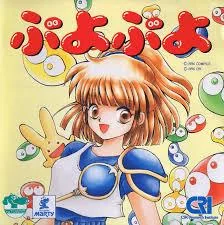
Puyo Puyo FM Towns Marty Price Guide & Value
Also Available On
Details Puyo Puyo (FM Towns Marty)
- Console
- FM Towns Marty
- Genre
- Puzzle
- Publisher
- CRI
- Release
- 1994
Market Value Puyo Puyo
Price History Puyo Puyo
Market Value & Price Range: Puyo Puyo
How much is Puyo Puyo worth on FM Towns Marty ?
Currently, we do not have an exact market value for this title. This puzzle title published by CRI remains a staple for any FM Towns Marty library.
Where to buy Puyo Puyo cheaper?
If you are looking where to buy Puyo Puyo cheaper, the best live offer currently starts at $60.00 for a Good copy.
Buying Guide & Authenticity
Is Puyo Puyo a rare game?
The rarity of Puyo Puyo on FM Towns Marty is currently difficult to assess with precision. This is primarily an NTSC version (US or Japan). Import demand may influence its availability.
Description Puyo Puyo
A year after the release of the falling block puzzle game Puyo Puyo for MSX and Famicom, an arcade version was released that took the basic concept, but transformed it from a solo into a competitive game, changing the series fundamentally: all ports and later entries in the series are based on this version. The original arcade version has two modes: a single-player story mode and a two-player competitive mode. In story mode (which is based on characters from Compile's RPG series Madō Monogatari), the player controls Arle Nadja (Silvana in the English translation of the arcade version), a young sorceress, whose goal is to defeat Satan. To do so, she has to win 12 battles against his minions until she can meet him in a final confrontation. The game offers an extra training mode against three lesser opponents, as well as the ability to start from level 4 of the main game. During a match, pairs of puyos fall down from the top of the screen into each player's field. They can be moved left or right, rotated in either direction and made to drop faster. The goal is to arrange puyos of the same color into patterns of at least four, with horizontal or vertical (but no diagonal) connections. Doing so removes them from the field (with any unconnected puyos falling down) while at the same time sending garbage blocks into the opponent's field. Creating patterns of more than four, several different patterns at the same time, or chain reactions creates more garbage blocks. The garbage blocks can only be removed by creating patterns adjacent to them. The player whose playing field reaches the top first loses. In single-player mode, the falling speed of the puyos increases level by level and each of the enemies plays in a unique style. The home ports also add an endless single-player mode, in which there is no opponent (and thus no garbage blocks) and one simply plays for a high score, similar to the MSX/Famicom version.