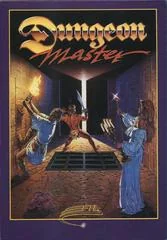
Dungeon Master Atari ST Price Guide & Value
Also Available On
Details Dungeon Master (Atari ST)
- Console
- Atari ST
- Genre
- RPG
- Publisher
- FTL Games
- Release
- 1987
Market Value Dungeon Master
Price History Dungeon Master
Market Value & Price Range: Dungeon Master
How much is Dungeon Master worth on Atari ST?
The current price guide for this title is around $50.00 for a Complete (CIB) copy. For serious collectors, a brand new / sealed copy is valued at approximately $99.99. Graded copies (WATA/VGA) have been seen reaching $109.99 depending on the grade. This rpg title published by FTL Games remains a staple for any Atari ST library.
Where to buy Dungeon Master cheaper?
If you are looking where to buy Dungeon Master cheaper, the best live offer currently starts at $29.28 for a Acceptable copy.
Buying Guide & Authenticity
Is Dungeon Master a rare game?
Dungeon Master on Atari ST is a moderately common game. Its current $50 CIB value makes it accessible yet desirable. This is primarily an NTSC version (US or Japan). Import demand may influence its availability.
Description Dungeon Master
Dungeon Master established several new standards for role playing and computer games in general. Dungeon Master was a realtime game instead of the traditional turn-based approach that was prevalent until then. Instead of using text-based commands to interact with the environment, players directly manipulated objects and the environment by clicking the mouse in the enlarged first-person view. Abstract Dungeons and Dragons style experience points and levels were eschewed in favor of a system where the characters' skills were improved directly via using them. It also introduced some novel control methods including the spell casting system, which involved learning sequences of runes which represented the form and function of a spell's effect. For example, a fireball spell was created by mixing the fire symbol with the wing symbol. This kind of attention to detail and focus on the user interface was typical of the game and helped create an often captivating sense of craft and ingenuity. Other factors in immersiveness were the then-revolutionary use of sound effects to indicate when a creature was nearby, and (primitive) dynamic lighting.