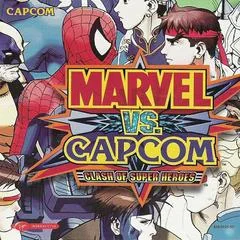
Marvel vs. Capcom: Clash of Super Heroes Sega Dreamcast Price Guide & Value
Also Available On
Details Marvel vs. Capcom: Clash of Super Heroes (Sega Dreamcast)
- Console
- Sega Dreamcast
- Genre
- Fighting
- Publisher
- Capcom
- Release
- 2000
Market Value Marvel vs. Capcom: Clash of Super Heroes
Price History Marvel vs. Capcom: Clash of Super Heroes
Market Value & Price Range: Marvel vs. Capcom: Clash of Super Heroes
How much is Marvel vs. Capcom: Clash of Super Heroes worth on Sega Dreamcast?
The current price guide for this title is around $89.58 for a Complete (CIB) copy. For serious collectors, a brand new / sealed copy is valued at approximately $125.31. This fighting title published by Capcom remains a staple for any Sega Dreamcast library.
Where to buy Marvel vs. Capcom: Clash of Super Heroes cheaper?
If you are looking where to buy Marvel vs. Capcom: Clash of Super Heroes cheaper, the best live offer currently starts at €14.00 for a Bon état copy.
Buying Guide & Authenticity
Is Marvel vs. Capcom: Clash of Super Heroes a rare game?
Marvel vs. Capcom: Clash of Super Heroes on Sega Dreamcast is a highly sought-after title. Valued at $89.58 complete-in-box, it's a valuable addition to any collection. The game exists in both PAL (Europe) and NTSC (US/Japan) formats, giving collectors options based on their budget and hardware.
Description Marvel vs. Capcom: Clash of Super Heroes
This PlayStation port differs from the arcade version, in that players are unable to switch characters on-the-fly, reducing the secondary character to an assist role only. Significantly, this removes the tag team aspect of the original. It instead offers a "Cross over" mode where each player chooses one character, and the second character for each team is a mirror of the opponent's pick. In this mode, the players may switch characters at will, but the teams must always be identical. This compromise is most likely necessitated by the console's small memory size, as the use of identical teams alleviates the memory requirements.
![Marvel vs Capcom [Sega All Stars]](/img-proxy/marvel-vs-capcom-sega-all-stars-sega-dreamcast.webp?width=400&resize=contain)
![Garou: Mark Of The Wolves [SNK Best]](/img-proxy/garou-mark-of-the-wolves-snk-best-sega-dreamcast.webp?width=400&resize=contain)